
Türkiye Investment Strategy 2026
Table of Contents
- 1. The 2026 Reality of Kanal Istanbul and Yenişehir
- 2. Arnavutköy and Başakşehir: The Twin Engines of Growth
- 3. Key Angle: Predicting the “New Levent” of the European Side
- 4. Land Investment Strategies: Arsa vs. Tarla in 2026
- 5. Strategic Corridors to Watch in Arnavutköy
- Conclusion: The Ultimate Capital Appreciation Play
- Frequently Asked Questions (FAQ)
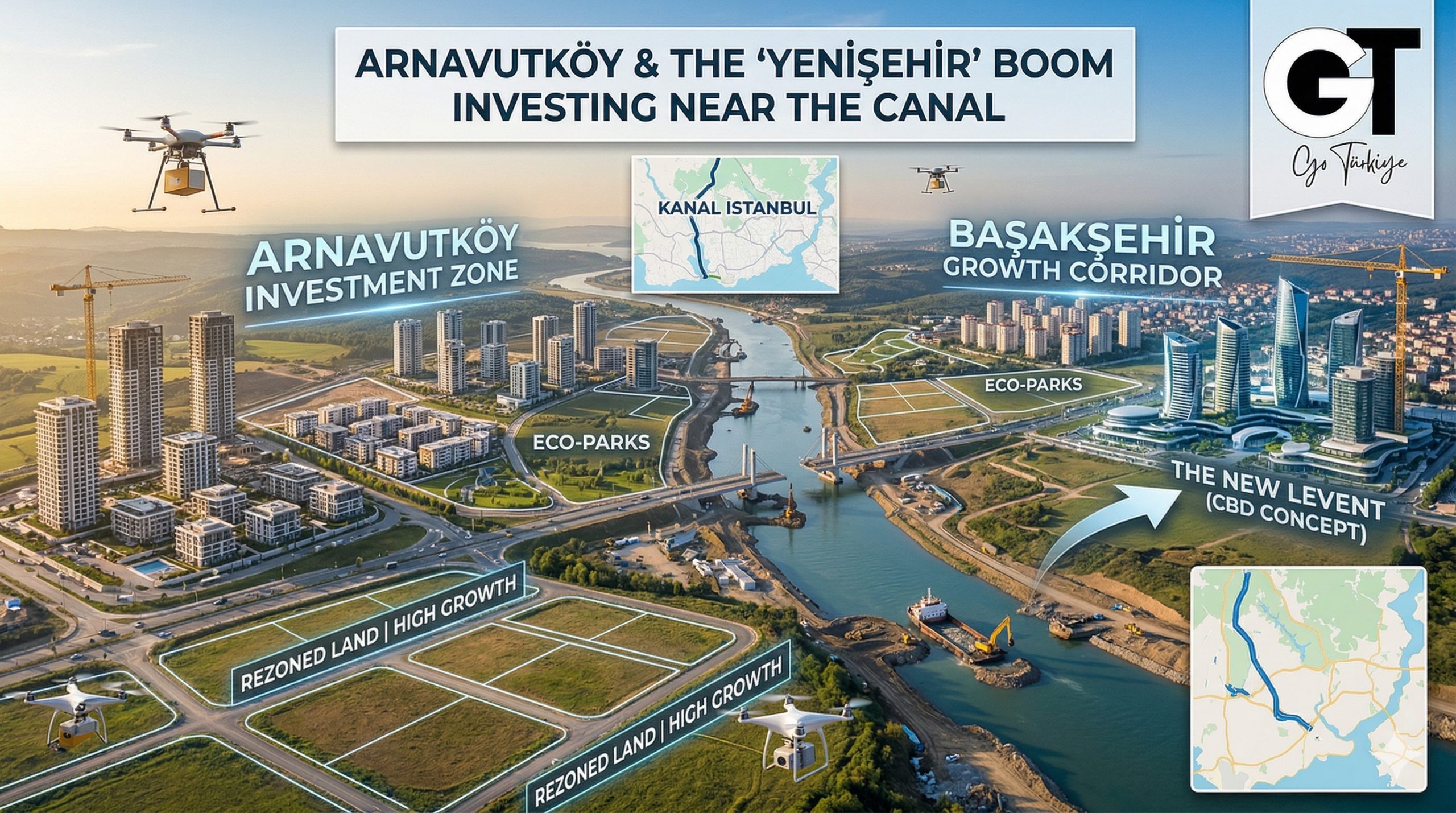
As we navigate through 2026, the Turkish real estate market has decisively shifted its center of gravity. For years, investors focused on the urban regeneration of central Istanbul or the coastal allure of the Mediterranean. However, the most lucrative and transformative wealth-generation vehicle in 2026 is undoubtedly the northern corridor of Istanbul’s European side. With the Kanal Istanbul project officially entering its critical infrastructure phase, the surrounding master-planned mega-city, “Yenişehir” (New City), is triggering a massive rezoning boom.
For institutional investors, land developers, and forward-thinking real estate brokers, the Arnavutköy and Başakşehir districts represent a once-in-a-generation opportunity. This comprehensive analysis decodes the 2026 landscape of the Kanal Istanbul corridor, exploring the mechanics of land investment, the aggressive rezoning masterplans, and why this specific geographic pocket is heavily predicted to become the “New Levent”—the next great financial and commercial epicenter of Europe’s largest city.
1. The 2026 Reality of Kanal Istanbul and Yenişehir
Conceived as an alternative global shipping route to the heavily congested Bosphorus Strait, Kanal Istanbul was long debated. However, in 2026, the project has transitioned from blueprints to heavy earth-moving and critical infrastructure development. The bridges spanning the canal route are rising, and the logistical frameworks are being cemented into the earth.
But for real estate investors, the canal itself is secondary. The true goldmine lies in Yenişehir, the sprawling, ultra-modern smart city being built along the canal’s banks.
The Massive Rezoning Initiative
To accommodate Yenişehir, the Turkish government has executed one of the largest urban rezoning initiatives in modern history. Millions of square meters of former agricultural land (Tarla) in districts like Arnavutköy and northern Başakşehir have been aggressively rezoned for residential, commercial, and logistical development (Arsa).
The state’s finalized zoning plans (the 1/100,000 and 1/5,000 scale development plans) have crystallized in 2026. This has removed the speculative risk that plagued early investors. Today, buyers can look at the municipal maps and know exactly where the commercial hubs, eco-parks, marinas, and residential zones will be. This regulatory clarity has opened the floodgates for institutional capital, making land acquisition in Arnavutköy the premier investment strategy of the decade.
2. Arnavutköy and Başakşehir: The Twin Engines of Growth
The development of Yenişehir heavily favors two primary districts on the European side, each serving a distinct strategic purpose in the 2026 masterplan.
Arnavutköy: The Blank Canvas
Historically a peripheral, rural district, Arnavutköy sits at the very heart of the Yenişehir project. It is uniquely sandwiched between the massive Istanbul Airport (now operating at peak global capacity) and the northern entry points of Kanal Istanbul.
- Logistics and Smart Living: Arnavutköy is being zoned for high-tech logistics parks, eco-friendly residential compounds, and massive green spaces. Investors purchasing land here in 2026 are capitalizing on the “ground-floor” entry price. When developers begin buying up these plots to construct the permitted luxury villas and smart-home apartments, the capital appreciation will be exponential.
Başakşehir: The Established Anchor
Başakşehir is further south and already boasts highly developed, modern infrastructure. In the context of Yenişehir, Başakşehir acts as the established anchor. It is the bridge connecting the new canal city to the traditional heart of Istanbul.
- Medical and Commercial Tourism: Home to the massive Çam and Sakura City Hospital, northern Başakşehir is seeing extreme demand for medical tourism accommodations, short-term luxury rentals, and commercial office spaces serving the healthcare and logistics sectors.
Dominate the Turkish Real Estate Market
The Kanal Istanbul and Yenişehir boom is attracting global institutional capital and high-net-worth investors. Are you positioned to capture this massive demand? Stop relying on unpredictable marketing. Connect directly with qualified, high-intent buyers looking for land, citizenship investments, and luxury off-plan projects in Turkey’s hottest zones.
Get Guaranteed Turkey Real Estate Leads NowExclusive high-intent lead generation for Brokers & Developers in Turkey.
3. Key Angle: Predicting the “New Levent” of the European Side
For decades, Levent and Maslak have reigned supreme as Istanbul’s primary Central Business Districts (CBDs). However, by 2026, these areas are suffering from severe geographical constraints, gridlocked traffic, and an aging building stock that struggles to meet modern ESG (Environmental, Social, and Governance) corporate mandates.
The masterplan for Yenişehir is deliberately engineered to pull corporate power away from the congested center and into the northern corridor. The intersection of southern Arnavutköy and northern Başakşehir is officially emerging as the “New Levent.”
Why the Corporate Exodus is Happening:
- Unmatched Connectivity: The “New Levent” corridor offers unparalleled logistical advantages. Executives can land at Istanbul Airport and be in their Grade-A office within 15 minutes. Furthermore, the newly completed Northern Marmara Highway and the expanding high-speed metro lines connect this district seamlessly to Europe and Asia.
- Horizontal and Green Architecture: Unlike the claustrophobic vertical skyscrapers of old Levent, the commercial zoning in Yenişehir mandates “horizontal architecture” integrated with vast ecological corridors. Multinational corporations, driven by 2026 carbon-neutral targets, are migrating here to occupy LEED-certified, smart-grid office campuses.
- Free Trade and Tech Hubs: The areas directly bordering the canal are heavily zoned for technology parks, R&D centers, and free-trade zones. This is drawing global tech giants and logistics titans who require large, adaptable floor plans that simply do not exist in central Istanbul.
For investors, acquiring commercially zoned land (Ticari İmar) in this specific corridor is the equivalent of buying land in Maslak in the late 1990s. The long-term yield potential is staggering.
4. Land Investment Strategies: Arsa vs. Tarla in 2026
The influx of capital into the Arnavutköy and Başakşehir corridors requires a highly strategic approach. Brokers must educate their clients on the distinct differences between land types in Turkey and the massive profit multipliers associated with zoning changes.
The “İmar” (Zoning) Multiplier
The core investment play in the Yenişehir boom is navigating the zoning process.
- Tarla (Agricultural Land): Buying unzoned agricultural land offers the lowest entry price but carries the highest risk. However, with the 2026 municipal maps finalized, savvy investors are buying Tarla that sits directly in the path of the next phase of rezoning.
- Arsa (Zoned Land): Once a Tarla is granted İmar (zoning permission for residential or commercial construction) by the municipality, its value typically multiplies by 300% to 500% overnight.
- The “Terk” (Relinquishment) Factor: Investors must be aware of Article 18 of the Turkish Zoning Law. When the municipality converts agricultural land to zoned city land, they legally retain up to 45% of the plot for public infrastructure (roads, parks, schools). Brokers must calculate the ROI based on the net remaining land, which, despite the size reduction, will be worth vastly more per square meter.
Consolidating for Developers
A highly profitable strategy in 2026 involves “land assembly.” Investment funds are purchasing multiple adjacent, newly zoned plots in Arnavutköy to create massive, unified parcels. These mega-parcels are then sold at a massive premium to international developers looking to construct branded, gated communities overlooking the canal.
5. Strategic Corridors to Watch in Arnavutköy
Not all land in Arnavutköy is created equal. As of 2026, the highest appreciation is hyper-localized into specific village corridors that have been absorbed by the Yenişehir masterplan:
- Dursunköy and Sazlıbosna: These areas boast direct frontage to the planned Kanal Istanbul route. Zoned primarily for premium, low-density residential villas and marina-facing commercial strips, land here is the ultimate luxury play.
- Tayakadın and Yeniköy: Situated closer to the Istanbul Airport, these corridors are the epicenters of the logistics and hospitality boom. Investments here are targeted at airport-hotel developments, cargo storage, and commercial transit hubs.
- Hacımaşlı: A highly strategic middle ground, favored for medium-density residential developments catering to the hundreds of thousands of white-collar workers who will staff the airport and the “New Levent” corporate campuses.
Conclusion: The Ultimate Capital Appreciation Play
As the Turkish real estate market matures in 2026, the era of relying solely on quick flips in the city center has faded. The serious, institutional wealth is now being deployed in the north. The Kanal Istanbul and Yenişehir mega-projects represent a total geographic and economic re-engineering of Istanbul.
The Arnavutköy and Başakşehir corridors are no longer speculative outskirts; they are the heavily funded, legally mandated future of the city. As the “New Levent” rises from the newly zoned lands, early investors who secure strategic parcels today will benefit from historic capital appreciation. For brokers, dominating this niche requires deep localized knowledge of municipal zoning laws, a strong network of land surveyors, and the ability to articulate this macroeconomic vision to global buyers.
Frequently Asked Questions (FAQ)
Q1: What exactly is “Yenişehir” in the context of Istanbul real estate? A: Yenişehir (meaning “New City”) is the massive, state-planned smart city being constructed along the banks of the Kanal Istanbul project. Spanning millions of square meters, primarily in the Arnavutköy and Başakşehir districts, it is designed to house over a million residents in high-tech, eco-friendly developments, shifting Istanbul’s demographic weight to the north.
Q2: Can foreign nationals buy land (Arsa/Tarla) in Turkey? A: Yes, foreigners can buy land in Turkey, but with restrictions. A foreign individual can own up to 30 hectares across the country. Crucially, if a foreigner buys agricultural land (Tarla), they are legally required to submit an agricultural project to the Ministry of Agriculture within two years. Because of this, many foreign investors prefer to buy already zoned land (Arsa) or invest via a Turkish Limited Liability Company (LLC) to bypass these specific restrictions.
Q3: Is investing in Arnavutköy land still profitable in 2026, or is it too late? A: While the initial “penny-stock” phase of agricultural land is over, 2026 marks the safest and most lucrative phase for institutional and mid-tier investors. Because the zoning plans are now finalized and infrastructure is actively being built, the risk has plummeted, and the actual construction boom is driving exponential value into zoned plots (Arsa).
Q4: Can I qualify for Turkish Citizenship by Investment by buying land near the Canal? A: Yes. The Turkish Citizenship by Investment program (currently requiring a minimum property investment of $400,000 USD in 2026) applies to real estate, including land. However, the land must have an official valuation report matching the required threshold, and investors must commit to holding the asset for a minimum of 3 years.
Q5: What is the difference between “İmar” and “Ifraz”? A: İmar refers to the official zoning permission granted by the municipality (e.g., residential, commercial, or agricultural). Ifraz is the physical and legal subdividing of a large plot of land into smaller, individually deeded parcels. In Arnavutköy, investors often buy large plots, wait for the İmar plan, execute Ifraz to divide the land, and sell the smaller, build-ready plots to individual buyers at a premium.
Q6: Why is the Başakşehir/Arnavutköy border being called the “New Levent”? A: Levent is Istanbul’s traditional financial district, which is now heavily congested. The masterplan for Yenişehir designates the southern Arnavutköy/northern Başakşehir corridor as a massive, modern commercial and tech hub. With close proximity to the Istanbul Airport, smart-city infrastructure, and vast green spaces, multinational corporations are relocating here, effectively creating a “New Levent.”