
Türkiye Property Radar
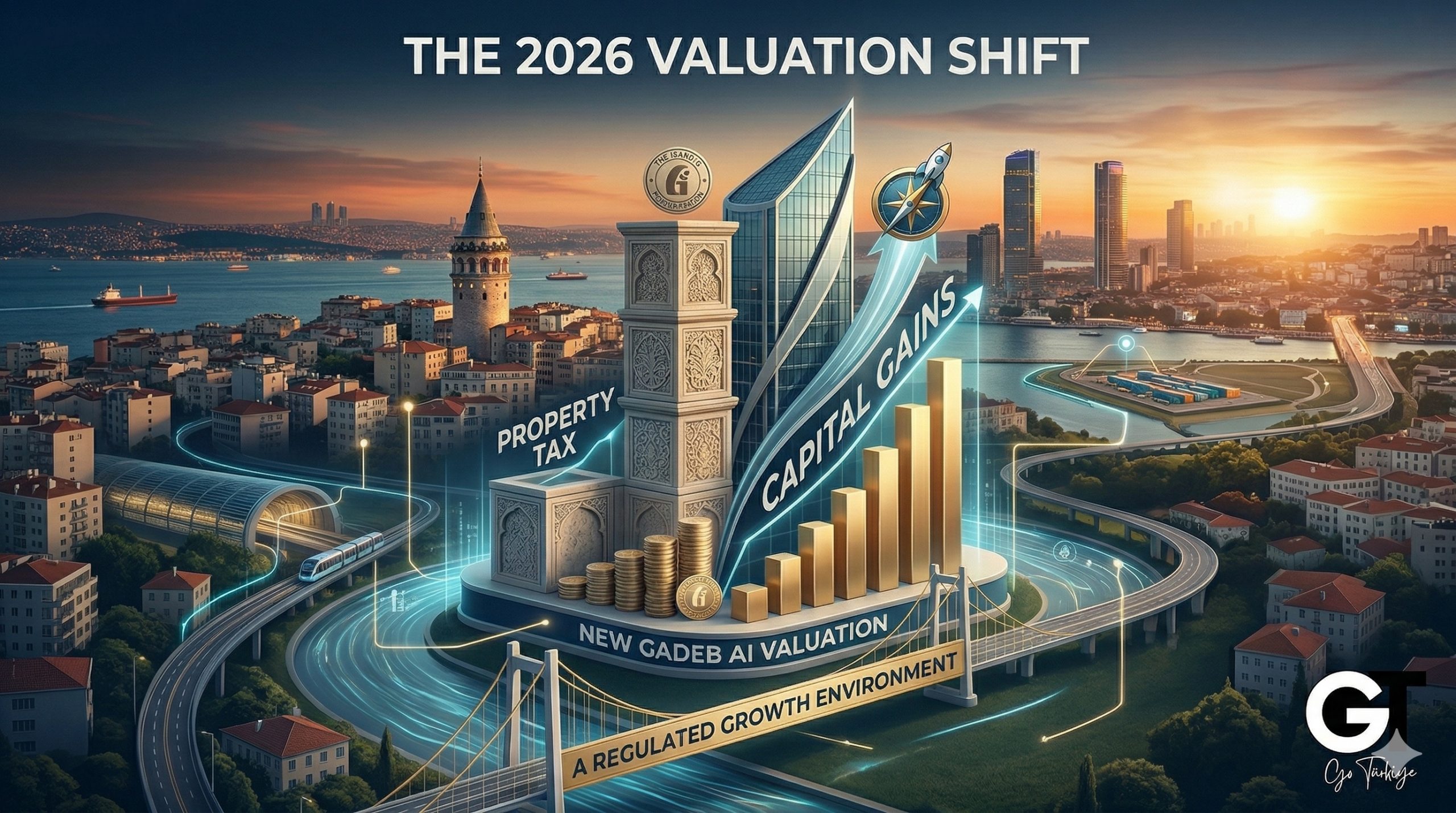
The Turkish real estate market has entered a transformative era. As of March 2026, the era of “gray market” valuations and under-reporting sales prices is officially over. With the commencement of the 2026-2029 General Property Valuation Cycle, the Turkish Ministry of Treasury and Finance, in coordination with the GADEB (Real Estate Value Administration), has implemented a nationwide digital synchronization of property values.
For the casual observer, rising property taxes and stricter title deed (Tapu) fees might seem like a deterrent. However, for the sophisticated international investor, this “Valuation Shift” represents the most significant move toward market transparency in the Republic’s history—paving the way for massive capital gains and a “bankable” real estate asset class.
1. The Death of the “Rayiç Bedel” Gap
For decades, the Turkish market operated with two prices: the “Municipal Value” (Rayiç Bedel) used for taxes, and the “Actual Market Value” used for the transaction. In many cases, the gap was as wide as 60%.
The 2026 Change: The new Web-Tapu AI Integration now pulls live data from the EİDS (Electronic Ad Verification System). If a property is listed on portals or GoTurkey.Estate for $500,000, the Land Registry system will no longer allow the transaction to be recorded at $200,000.
The Investor Benefit: While this increases the one-time Title Deed Fee (4%), it creates a clean, legal exit strategy. When you go to sell your asset in 2029, your capital gains are calculated on a transparent, documented baseline. This eliminates the risk of “Internal Revenue Audits” that previously plagued foreign sellers.
2. Why Capital Gains are Accelerating in 2026
While taxes are higher, the supply-demand curve in Türkiye has reached a critical “Squeeze Point.”
- Urban Transformation 2.0: The 2026 “Resilient Cities” mandate has fast-tracked the demolition of older, non-compliant buildings in Istanbul’s Zeytinburnu, Kadıköy, and Üsküdar. This has removed thousands of units from the market, driving up the value of “New Generation” earthquake-resistant branded residences.
- The $200,000 Residency Threshold: Since the late 2024 update, the “Tourist Residence” is dead. Only investors committing $200,000 or more can secure residency. This has effectively “gentrified” the foreign buyer pool, moving away from low-cap apartments toward high-quality, liquid assets that appreciate at 15-22% annually in USD terms.
3. The Role of GEDAŞ and Independent Appraisals
In 2026, the GEDAŞ (Real Estate Valuation Center) has become the ultimate gatekeeper. Every transaction involving a foreigner now requires a digital “Valuation Certificate” issued via an encrypted blockchain-verified system.
This prevents “Price Padding” by rogue developers. For the investor, this means the price you see on GoTurkey.Estate is verified against real-time district data. You are no longer “buying the passport”—you are buying an asset at its true technical value.
4. Infrastructure Multipliers: The 2026 Map
Capital gains in 2026 are being driven by the completion of “Mega-Links”:
- The M12 Göztepe-Ümraniye Line: Transforming the financial center (Ataşehir) into a high-rental-yield powerhouse.
- The Kanal Istanbul Logistics Zone: While the canal remains a long-term project, the logistics hubs around Arnavutköy have seen a 40% land value spike in Q1 2026 due to the new “Free Trade Status” for e-commerce warehouses.
Master the 2026 Market
Don’t guess your ROI. Use our AI-driven “2026 Strategy Form” to get a customized investment report based on the latest tax laws and valuation shifts.
Get My 2026 Strategy Report5. Managing the New Tax Burden: 2026 Strategies
With the valuation shift, property taxes (Emlak Vergisi) have increased. However, smart investors are using the following 2026 tax-shield strategies:
- VAT Exemption (KDV Muafiyeti): For first-time buyers bringing foreign currency into Türkiye via the DAB (Foreign Exchange Purchase Certificate) system, the 10-20% VAT remains exempt. This immediately offsets the 2026 rise in municipal taxes.
- Rental Management Corporations: Instead of holding 5+ properties as an individual (triggering high income-tax brackets), investors are forming Turkish “LTD” companies. This allows for the deduction of maintenance, management fees, and interest, significantly lowering the effective tax rate.
6. The Verdict: Is 2026 the Year to Buy?
The “Valuation Shift” has removed the volatility from the market. We have moved from a speculative, high-risk environment to a Regulated Growth Environment.
The rising taxes are simply the “entry fee” for a market that is now more transparent, more institutional, and legally safer than ever before. With the Turkish Lira (TRY) reaching a stabilized corridor and the inflation-index adjustments on property values, your capital is protected against local currency fluctuations through the sheer velocity of property price increases.
In 2026, you aren’t just buying a house in Türkiye; you are buying a seat at the table of the world’s most resilient emerging real estate market.